How Integrated Scales Save Time in Retail Businesses
Retail businesses that sell products by weight often spend extra time weighing items, calculating prices, and entering measurements into the POS system. These manual steps can slow down checkout and increase the risk of pricing errors.
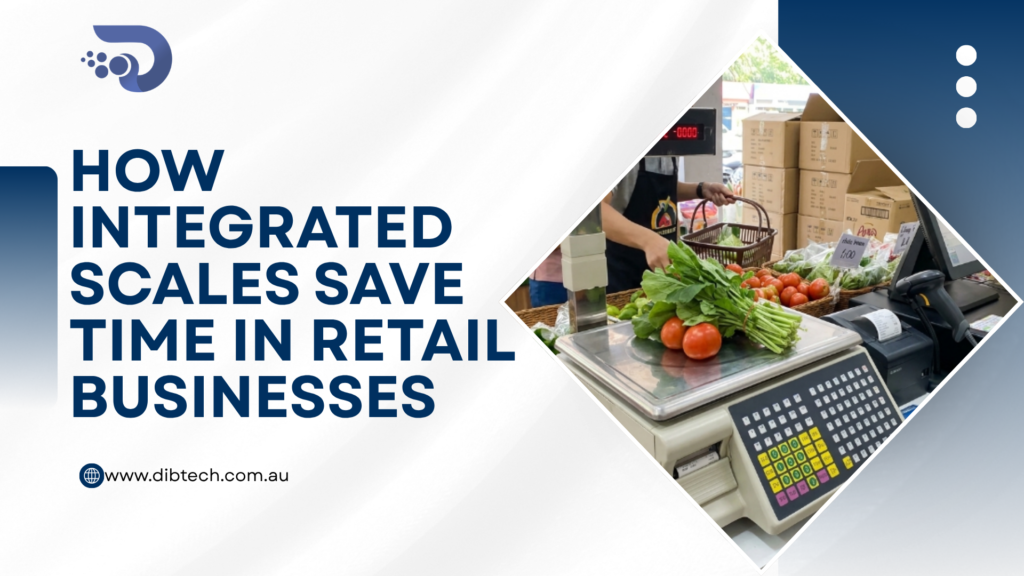
An integrated scale connects directly with the POS system, allowing the weight of a product to be captured automatically. The POS can then calculate the price based on the product’s configured price per kilogram, gram, or another unit.
This creates a faster and more accurate checkout process.
1. Faster Checkout Processing
With a traditional scale, employees may need to weigh an item separately and manually enter the weight into the POS.
An integrated scale reduces these steps. Once the product is placed on the scale, the weight can be sent directly to the POS.
The process becomes:
Place Product on Scale → Capture Weight → Calculate Price → Add to Sale
This helps staff process transactions more quickly, especially during busy periods.
2. Reduces Manual Data Entry
Manual entry takes time and can create mistakes.
Employees may accidentally enter:
- The wrong weight
- An incorrect product code
- An incorrect price
- The wrong quantity
- An incorrect unit of measurement
An integrated scale sends the weight directly to the POS, reducing the amount of information staff need to enter manually.
3. Improves Pricing Accuracy
Products sold by weight often have prices based on kilograms or grams.
For example, if meat is priced at $15 per kilogram, the POS can calculate the total price based on the measured weight.
This helps ensure that customers are charged according to the actual weight of the product and the configured selling price.
4. Makes Weighed-Product Sales Easier
Integrated scales are useful for businesses selling products such as:
- Fresh meat
- Fruits and vegetables
- Cheese
- Seafood
- Bulk groceries
- Nuts and grains
- Deli products
- Confectionery
Instead of using separate systems for weighing and billing, staff can complete the process through the connected POS.
5. Reduces Customer Waiting Times
Long queues can develop when employees must weigh products separately and enter the details manually.
An integrated scale can simplify the checkout process and reduce the time required for each weighed-product transaction.
Faster transactions can help retailers serve more customers during peak trading periods.
6. Improves Staff Productivity
Employees can spend less time performing repetitive tasks such as recording weights and calculating prices.
This allows them to focus on:
- Serving customers
- Packing products
- Restocking shelves
- Answering customer questions
- Maintaining checkout areas
A simpler process can also make it easier for new employees to learn how to process weighed products.
7. Reduces Calculation Errors
Calculating prices manually can lead to incorrect totals, especially when staff are working quickly.
An integrated POS and scale can automatically calculate the selling price using the product’s configured price and measured weight.
This helps reduce errors involving:
- Weight calculations
- Decimal points
- Unit conversions
- Product pricing
- Total transaction amounts
8. Improves Inventory Tracking
When the integrated scale is connected to the POS inventory system, the sale can be recorded using the measured quantity.
For example, if a customer purchases 1.5 kilograms of a product, the POS can record the appropriate quantity against that product.
This can help retailers maintain more accurate inventory records and understand how much stock is being sold by weight.
9. Supports Better Sales Reporting
POS systems can provide reports showing sales of weighed products.
Retailers may be able to review:
- Best-selling weighed products
- Total quantity sold
- Sales by product
- Sales by category
- Revenue generated by weighed items
- Stock movement
These reports can help business owners make better purchasing and inventory decisions.
10. Helps Maintain Consistent Pricing
When product prices are configured in the POS, the system can apply the correct price according to the measured weight.
This helps ensure that staff do not use different manual calculations or outdated price lists.
Retailers can update product pricing in the POS when supplier costs or selling prices change.
11. Improves Customer Confidence
Customers expect weighed products to be priced accurately and transparently.
An integrated scale can help provide a consistent process for measuring products and calculating prices.
Clear pricing and accurate weighing can improve customer confidence and reduce disputes at checkout.
12. Supports a More Connected Retail Workflow
An integrated scale connects the weighing process with sales processing and inventory management.
Instead of using separate tools, retailers can manage the process through one connected system:
Product Weighing → POS Price Calculation → Payment → Inventory Update → Sales Report
This can help create a smoother and more efficient retail operation.
Best Practices for Using an Integrated Scale
Retailers should consider the following practices:
- Configure product prices and measurement units correctly.
- Check that the scale is properly connected to the POS.
- Test different products and weights before using the system.
- Calibrate the scale according to the manufacturer’s instructions.
- Train staff to place products correctly on the scale.
- Regularly check scale accuracy.
- Keep product information and pricing up to date.
- Review inventory and sales reports regularly.
- Clean and maintain the scale properly.
- Confirm that the measured weight is displayed correctly before completing a sale.
Conclusion
Integrated scales help retail businesses save time by connecting weighing, price calculation, checkout, and inventory management in one process. They reduce manual data entry, improve pricing accuracy, speed up transactions, and make it easier for staff to manage products sold by weight.
For supermarkets, grocery stores, butcher shops, delis, and other weighing-based retailers, integrating a scale with the POS system can improve both operational efficiency and customer service.