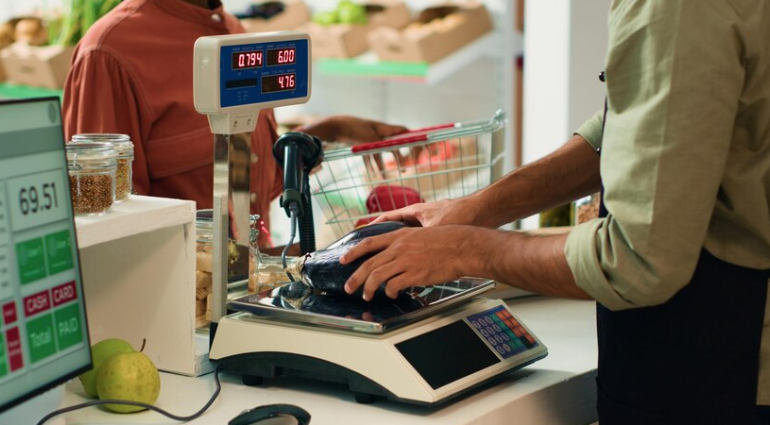
How POS Reporting Improves Accuracy in Financial Statements

Accurate financial statements are the foundation of every successful business. They guide decision-making, ensure regulatory compliance, and reflect the true financial health of an organization. However, achieving accuracy can be challenging when records are maintained manually or across disconnected systems. This is where modern Point of Sale (POS) systems play a critical role. Through detailed and automated reporting, POS systems significantly improve the accuracy of financial statements while reducing errors and inefficiencies.
Eliminating Manual Data Entry Errors
One of the most common causes of inaccurate financial statements is manual data entry. When sales figures, taxes, and payments are recorded by hand or transferred between systems, the risk of mistakes increases. POS systems eliminate this issue by automatically capturing every transaction at the point of sale. Each sale, refund, discount, and tax calculation is recorded in real time, ensuring that financial data is precise from the start.
By removing repetitive manual processes, POS reporting reduces human error and creates a reliable source of truth for financial reporting.
Real-Time Data for Consistent Financial Records
POS systems update financial data instantly as transactions occur. This real-time reporting ensures that sales figures, revenue totals, and tax amounts are always current. As a result, financial statements such as income statements and cash flow reports are based on up-to-date data rather than outdated estimates.
This consistency is especially valuable for businesses that operate across multiple shifts or locations. Real-time POS reports consolidate transaction data into a single system, maintaining uniformity across all financial records.
Accurate Revenue Recognition
Revenue recognition errors can distort financial statements and lead to compliance issues. POS reporting ensures that revenue is recorded accurately at the time of the transaction. Sales reports clearly distinguish between completed sales, refunds, voids, and discounts, preventing overstatement or understatement of revenue.
This level of detail helps accountants and business owners align financial statements with accepted accounting practices, improving both transparency and credibility.
Improved Tax Reporting and Compliance
Tax accuracy is a critical component of financial statements. POS systems automatically calculate applicable taxes during each transaction based on predefined rules. POS reports then break down tax collected by category, rate, or location, making it easier to verify totals.
Accurate tax reporting reduces the risk of miscalculations, penalties, and compliance issues. When financial statements are supported by detailed POS tax reports, audits become smoother and less time-consuming.
Better Cash Flow Tracking
POS reporting enhances cash flow accuracy by providing clear visibility into payment methods such as cash, cards, digital wallets, and online payments. Daily settlement reports show exactly how much money was received and through which channels.
This clarity helps ensure that bank deposits, merchant settlements, and recorded revenues align perfectly. Discrepancies can be identified quickly, preventing cash shortages or accounting mismatches from affecting financial statements.
Inventory Valuation Accuracy
Inventory directly impacts financial statements through cost of goods sold and asset valuation. POS systems automatically update inventory levels as items are sold. Inventory reports generated from POS data reflect actual stock movement rather than estimates.
Accurate inventory reporting ensures that financial statements present a realistic view of costs, margins, and remaining stock value. This is especially important for retail and hospitality businesses where inventory turnover is frequent.
Simplified Reconciliation and Audits
Reconciling sales, cash, and bank deposits is far easier with POS-generated reports. Detailed transaction logs allow accountants to trace figures back to individual sales, increasing confidence in financial accuracy.
During audits, POS reports serve as verifiable documentation, supporting the figures presented in financial statements. This transparency strengthens trust with auditors, investors, and financial institutions.
Conclusion
POS reporting plays a vital role in improving the accuracy of financial statements. By automating data capture, providing real-time insights, and ensuring consistent reporting across sales, taxes, inventory, and payments, POS systems minimize errors and enhance financial clarity. For businesses seeking reliable financial records and stronger control over their operations, POS reporting is not just a convenience—it is a necessity for long-term success.