Cloud POS vs Traditional POS: Which Is Better?
Introduction
Choosing the right Point of Sale (POS) system is one of the most important decisions for any retail store, restaurant, café, or service-based business. A POS system not only handles billing and payments but also manages inventory, customer data, sales reporting, and overall business operations.
Today, businesses commonly choose between two types of POS systems: Cloud POS and Traditional POS. While both serve the same basic purpose, they differ significantly in terms of functionality, accessibility, maintenance, and cost. In the world of retail and hospitality, your Point of Sale (POS) system is the heartbeat of your business. It’s where every interaction happens, every dollar is counted, and every piece of data is generated.
For years, the “Traditional” POS a bulky machine sitting on a counter, tied to a local server was the industry standard. But times have changed. Today, the conversation has shifted toward the Cloud. If you’re currently deciding between upgrading your legacy system or making the leap to the cloud, here is a breakdown to help you decide which path is right for your growth.
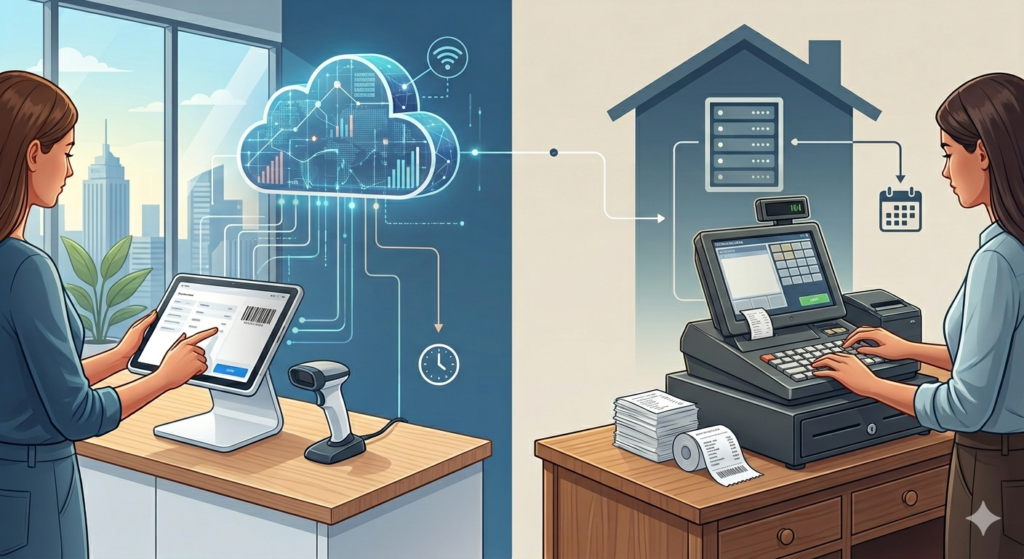
Cloud-based POS systems
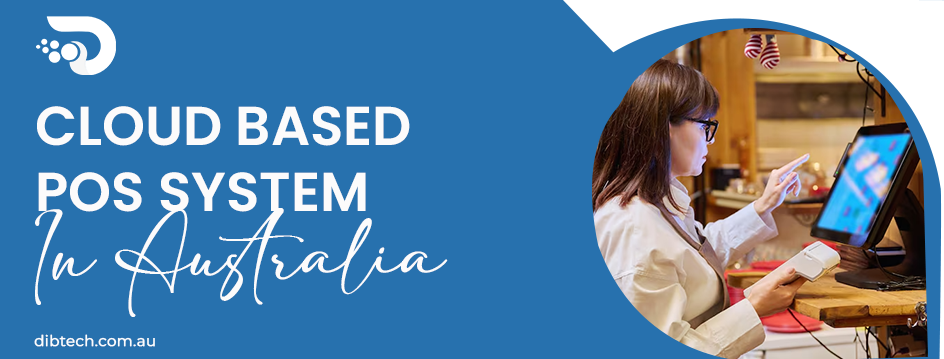
They move the heavy lifting to remote servers, meaning the device at your counter is just a portal. A Cloud POS system stores business data online and allows users to access the system through the internet from multiple devices such as computers, tablets, and smartphones. This shift has unlocked three major advantages:
1. Real-Time Data, Anywhere
With a Cloud POS, your office is wherever you are. Whether you’re at home, on vacation, or managing a second location, you can view live sales, adjust inventory, and pull reports from your laptop or smartphone. In a fast-paced market, this visibility isn’t just nice to have it’s a competitive advantage.
2. Scalability Without the Headache
Remember the days of paying thousands of dollars for a new server just to open a second location? Those days are effectively over. Adding a new site to a Cloud POS usually involves simply setting up a new device and logging in. It grows at the speed of your ambition.
3. Automatic Updates
Traditional software often requires manual updates sometimes involving expensive IT support and downtime. Cloud systems update automatically in the background. You’re always on the latest version with the newest features and security patches, without lifting a finger.
Cloud POS solutions are becoming increasingly popular because of their flexibility and real-time accessibility.
Advantages of Cloud POS
1.Access business data from anywhere
2.Automatic software updates
3.Real-time inventory and sales tracking
4.Easy integration with online ordering and payment systems
5.Scalable for multi-store businesses
6.Lower hardware requirements
Traditional POS System
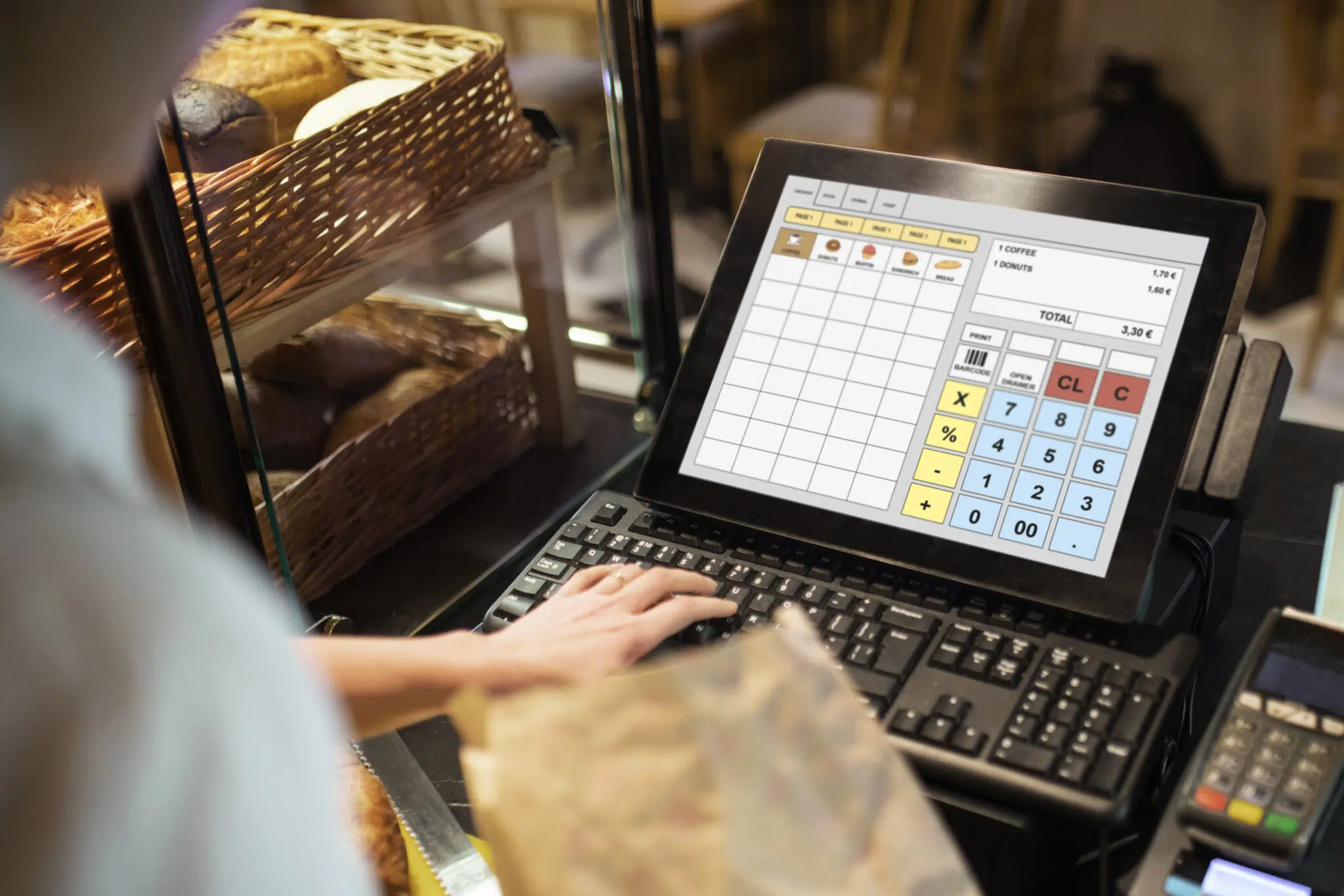
A Traditional POS system is an on-premise setup where all data and software are stored locally on a computer or server within the business premises. Traditional systems are best for businesses that operate in a fixed location and prioritize absolute control over their environment and data.
While the Cloud is the trend, it isn’t the only solution. There are specific scenarios where a Traditional, on-premise system still makes sense:
1. The “Zero-Internet” Reality
If your business is in a location where the internet connection is unreliable or non-existent, a system that requires a constant cloud handshake might be frustrating.
2. Total Data Autonomy
Some business owners, particularly those in highly regulated industries or with specific security requirements, prefer to have their data stored on a physical server they can touch and control directly.
3. The “Pay Once” Mentality
If you have the capital upfront and hate the idea of a monthly subscription fee, a traditional license can feel more budget-friendly in the long run.
Traditional POS systems have been widely used for many years and are still preferred by some businesses that operate in stable, offline environments
Advantages of Traditional POS
1.Works without internet connectivity
2.One-time purchase in many cases
3.Greater control over local data
4.Stable performance in offline operations
Which POS System Is Better for Your Business?
Choose Cloud POS If:
- You operate multiple locations
- You need remote business monitoring
- You want real-time sales and inventory updates
- You prefer automatic updates and backups
- You plan to integrate online ordering or eCommerce
Cloud POS systems are ideal for modern businesses looking for flexibility, mobility, and scalability.
Choose Traditional POS If:
- Your business has unreliable internet access
- You prefer storing data locally
- You want a one-time investment model
- Your operations are simple and limited to one location
Traditional POS systems may still work well for small businesses with basic operational needs.
Final Thoughts
Both Cloud POS and Traditional POS systems have their own strengths and limitations. The right choice depends on your business size, budget, operational requirements, and future growth plans.
If your business values flexibility, scalability, and remote accessibility, a Cloud POS system is often the better option. However, if you need a stable offline setup with local control, a Traditional POS system may still be suitable.
Before making a decision, carefully evaluate your business needs and choose a POS solution that supports your long-term growth and operational efficiency.