How QR Table Ordering Improves Customer Experience and Restaurant Efficiency
In today’s fast-paced hospitality industry, customers expect quick service, convenient ordering, and a smooth dining experience. At the same time, restaurant owners want to serve customers efficiently, reduce staff workload, and manage orders accurately. QR table ordering helps restaurants achieve these goals by allowing customers to browse menus and place orders directly from their smartphones.
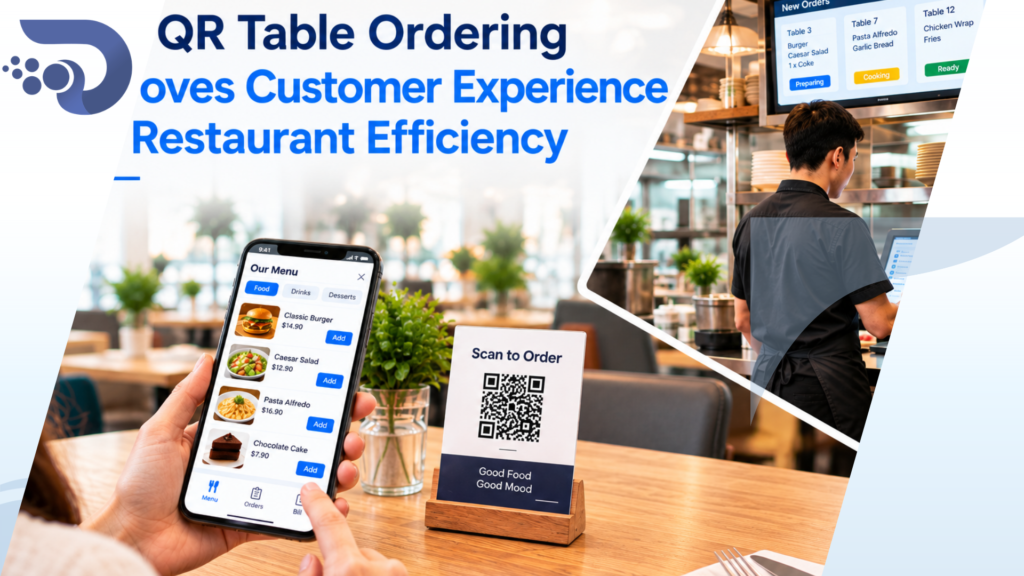
Instead of waiting for a printed menu or a staff member to take their order, customers can scan a QR code placed on their table and order digitally. When integrated with a restaurant POS system, these orders can be sent directly to the system for processing, helping improve communication between the front-of-house team and kitchen staff.
Let’s explore how QR table ordering benefits both customers and restaurant staff.
1. Faster and More Convenient Ordering
One of the biggest advantages of QR table ordering is convenience. Customers can scan the QR code on their table, view the digital menu, select their preferred dishes, and submit their orders using their smartphones.
This reduces the need to wait for a waiter to bring a menu or take the initial order.
For example, during busy lunch or dinner periods, customers can begin ordering as soon as they are ready. Restaurant staff can focus on serving meals, assisting customers, and managing other responsibilities.
Key benefits:
- Customers can order when they are ready.
- Less waiting time before placing an order.
- Staff can serve more tables efficiently.
- The dining experience becomes smoother.
2. Reduce Pressure on Restaurant Staff
Restaurant staff often handle multiple responsibilities, including welcoming guests, explaining menu items, taking orders, serving food, processing payments, and preparing tables for new customers.
QR table ordering can reduce some of this workload by allowing customers to place orders themselves.
Instead of manually taking every order, staff can focus on tasks that require personal attention, such as helping customers with dietary requirements, resolving concerns, and delivering excellent service.
This can be particularly useful during peak hours when restaurants experience high customer volumes.
3. Improve Order Accuracy
Manually taking orders can sometimes lead to mistakes, especially in busy restaurants. Staff may mishear a customer’s request, enter the wrong quantity, or overlook a special instruction.
With QR table ordering, customers can review their selections before submitting the order.
When the system is integrated with the restaurant POS, order details can be transferred digitally, reducing the need for staff to re-enter information.
This can help minimise errors involving:
- Food and beverage selections
- Item quantities
- Available modifiers and add-ons
- Special preparation instructions, where supported
Fewer order mistakes can reduce food waste, avoid unnecessary remakes, and improve customer satisfaction.
4. Make Digital Menus Easier to Access
Printed menus can become outdated when prices change, new dishes are introduced, or certain items become unavailable.
A digital QR menu allows restaurants to update menu information through their supported ordering or POS platform without reprinting physical menus.
Customers can use their phones to browse available items, view descriptions, and check prices before placing an order.
Restaurants can also display appetising food images, highlight popular dishes, and promote seasonal specials where the system supports these features.
This creates a more informative and convenient ordering experience.
5. Improve Communication Between Front-of-House and Kitchen
Communication between waitstaff and kitchen teams is essential for smooth restaurant operations. Delays or incorrect information can affect food preparation and service speed.
When QR table ordering connects with a POS system and kitchen display system (KDS) or kitchen printer, orders can be routed digitally to the appropriate preparation area.
For example, when a customer orders a burger and a drink, the system can send the relevant order details to the kitchen or bar according to its configuration.
This helps staff avoid repeatedly walking between tables and service counters to communicate order details.
The result: better order visibility, smoother workflows, and fewer communication-related delays.
6. Help Restaurants Serve Customers More Efficiently
During busy periods, customers may have to wait for staff to take orders. QR table ordering can help reduce this bottleneck by allowing several tables to submit orders without waiting for a staff member to become available.
Staff can then concentrate on delivering food, clearing tables, refilling drinks, and attending to customer requests.
Restaurants may be able to manage busy service periods more effectively, although the actual improvement depends on kitchen capacity, staffing levels, and how the ordering system is configured.
7. Encourage Additional Sales Through Menu Suggestions
QR ordering can create opportunities to increase average order value by presenting relevant add-ons and recommendations while customers browse the menu.
For example:
- A customer ordering a burger may see an option to add fries.
- Someone ordering coffee may be offered a cake or pastry.
- Customers choosing a main meal may see available side dishes or drinks.
Restaurants can also highlight meal deals, popular products, and special promotions.
When these features are supported by the ordering platform, they help restaurants promote additional products without requiring staff to suggest every item manually.
8. Improve Customer Satisfaction
A positive dining experience involves more than the food. Customers also value convenience, clear information, accurate orders, and timely service.
QR table ordering gives customers more control over when they browse the menu and submit their order. It can be especially helpful for customers who prefer digital interactions or want to review menu options at their own pace.
However, QR ordering should complement—not completely replace—personal service. Some customers may prefer a printed menu or assistance from staff.
Offering both digital and traditional ordering options allows restaurants to serve different customer preferences.
9. Support Faster Order Processing and Payment
Depending on the platform, QR table ordering may support additional functions such as calling for assistance, requesting the bill, or paying online.
If integrated with the restaurant POS and payment system, these features can simplify parts of the ordering and payment process.
For example, customers may be able to review their order and complete payment from their phones without waiting for staff to bring a bill or payment terminal.
Payment functionality varies between systems, so restaurants should confirm whether their QR ordering solution supports online payments, split bills, and other required features.
10. Provide Better Sales Insights for Restaurant Owners
When QR table ordering is connected to a POS system, restaurants can use consolidated sales reports to understand customer purchasing patterns and business performance.
Depending on the system’s reporting capabilities, restaurant owners may be able to identify:
- Best-selling food and beverage items
- Popular add-ons and modifiers
- Peak ordering periods
- Sales performance across different periods
- The effectiveness of menu promotions
These insights can help restaurants make better decisions about menu planning, stock levels, staffing, and promotional campaigns.
11. Reduce Manual Work and Improve Operational Efficiency
QR table ordering can reduce repetitive tasks, including manually recording orders and transferring order details between staff and the kitchen.
When combined with POS reporting, inventory tools, and kitchen integration, it can help restaurants manage more of their operations through a connected system.
For the best results, restaurants should ensure that their QR ordering solution supports the features they need and that staff are trained to manage incoming orders, customer questions, and technical issues.
Best Practices for Implementing QR Table Ordering
To get the most out of QR table ordering, restaurants should follow these practical steps:
- Place QR codes clearly: Make sure every table has a visible, easy-to-scan code linked to the correct table.
- Keep the digital menu updated: Ensure prices, descriptions, modifiers, and availability are accurate.
- Integrate with the POS: Where possible, connect online orders directly to the POS to reduce manual entry.
- Connect the kitchen workflow: Configure orders to reach the correct kitchen printer or KDS station.
- Train restaurant staff: Ensure employees know how to monitor orders and assist customers.
- Keep alternatives available: Continue offering staff-assisted ordering for customers who need it.
- Monitor performance: Review customer feedback, order accuracy, service times, and sales reports to identify areas for improvement.
Conclusion
QR table ordering is a practical way for restaurants to improve customer convenience while making everyday operations more efficient. Customers can browse menus and place orders from their smartphones, while restaurant staff can spend less time taking orders manually and more time focusing on service.
When integrated with a POS system, kitchen printers, or a kitchen display system, QR table ordering can also improve order communication, reduce manual errors, support additional sales, and provide useful business insights.
For modern restaurants, QR table ordering is more than a digital menu—it is a way to create a smoother dining experience and a more organised service workflow.