Restaurant POS Software: The Key to Faster Service and Better Business Management
Running a restaurant involves managing orders, payments, staff, inventory, tables, and customer service—all while maintaining speed and accuracy. Manual processes can make these tasks time-consuming and increase the risk of errors.
A modern restaurant POS software brings these operations together in one system. From taking orders and sending them directly to the kitchen to tracking sales and managing staff, a POS system can help restaurants improve efficiency and make better business decisions.
1. Faster Order Processing
A restaurant POS allows staff to enter customer orders directly into the system. Instead of writing orders manually and taking them to the kitchen, the order can be sent electronically to the appropriate kitchen printer or preparation station.
This helps reduce unnecessary movement and allows kitchen staff to begin preparing orders sooner.
2. Reduces Order Errors
Manual order taking can lead to mistakes caused by unclear handwriting, incorrect quantities, or forgotten modifications.
POS software records orders digitally and can display important information such as:
- Product names
- Quantities
- Modifiers
- Special instructions
- Table numbers
- Order numbers
Clear and accurate order information helps front-of-house and kitchen staff stay coordinated.
3. Streamlines Kitchen Operations
Restaurant POS software can integrate with kitchen printers and route products to different preparation areas.
For example:
| Product | Printing Station |
|---|---|
| Burgers | Grill |
| Pizza | Pizza Station |
| Drinks | Bar |
| Desserts | Dessert Station |
This allows each team to focus on the orders relevant to their station and can improve kitchen organisation during busy periods.
4. Simplifies Table Management
For dine-in restaurants, managing tables efficiently is essential.
A POS system can help staff view table availability, assign orders to specific tables, and keep track of open orders. This makes it easier to manage customer orders from the moment they are placed until the bill is settled.
Better table organisation can also help restaurants manage busy periods more effectively.
5. Integrated EFTPOS for Faster Payments
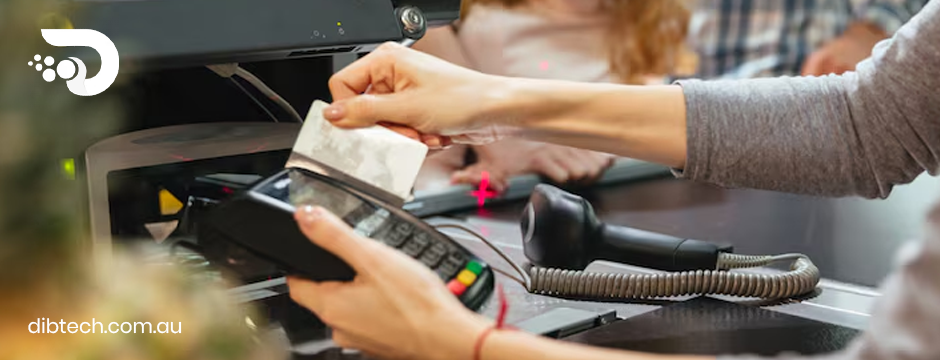
Integrated EFTPOS can make the payment process faster and reduce manual entry.
When the POS and EFTPOS terminal are integrated, transaction information can be sent between the systems automatically. This can reduce the need for staff to manually enter payment amounts and help minimise payment-entry errors.
It also makes it easier for staff to connect sales with completed payments.
6. Better Sales Tracking
Restaurant POS software records sales transactions, giving management access to useful sales information.
Reports can help answer questions such as:
- Which menu items are selling the most?
- What are the busiest trading periods?
- Which staff members are generating the most sales?
- Which payment methods are being used?
- How are different terminals performing?
This information can help restaurant owners make decisions based on actual business data.
7. Improved Inventory Management
Restaurants need to monitor ingredients and products carefully to avoid unnecessary waste and stock shortages.
A POS system can help track product sales and inventory levels. By understanding which products sell quickly and which move slowly, restaurants can make more informed purchasing decisions.
This can help reduce over-ordering and improve stock control.
8. Easier Staff Management
Restaurant POS systems can provide features that help managers monitor staff activity.
Depending on the system, managers may be able to track:
- Staff clock-in and clock-out
- Sales by user
- Discounts
- Refunds
- Voids
- User permissions
- Staff performance
These tools can improve accountability and help managers identify areas where additional training may be needed.
9. Supports Promotions and Discounts
Restaurants often use promotions to attract customers and increase order values.
POS software can help staff apply configured discounts and promotions consistently. Instead of manually calculating discounts, the system can apply the appropriate pricing rules.
This can reduce pricing errors and make promotional campaigns easier to manage.
10. Helps Improve Customer Service
Fast and accurate service has a direct impact on the customer experience.
When employees spend less time handling paperwork and manually calculating transactions, they can focus more on customers.
A streamlined POS workflow can help restaurants:
- Take orders faster
- Reduce mistakes
- Process payments efficiently
- Manage tables more effectively
- Respond to customer requests quickly
11. Cloud Access for Better Business Management
Cloud-enabled restaurant POS systems can give business owners access to important information remotely.
Depending on the POS setup, owners and managers may be able to review sales reports and business performance without being physically present at the restaurant.
This can be especially useful for restaurant owners managing multiple locations.
12. Better Business Decisions
The real value of restaurant POS software goes beyond processing transactions.
Sales, staff, inventory, and payment data can provide valuable insights into how the restaurant is performing.
For example, management can use sales reports to identify popular products, analyse peak periods, plan staffing levels, and adjust inventory purchasing.
This turns the POS from a simple checkout system into a valuable business management tool.
Best Practices When Using Restaurant POS Software
To get the most from a restaurant POS system:
- Keep menu items and prices updated.
- Configure kitchen printers correctly.
- Use clear product categories and modifiers.
- Train staff on the ordering and payment process.
- Set appropriate user permissions.
- Regularly review sales and staff reports.
- Monitor inventory and high-selling products.
- Test EFTPOS and printer connections regularly.
- Keep the POS software and connected hardware maintained.
- Review the POS setup whenever the restaurant changes its menu or workflow.
Conclusion
Restaurant POS software can help businesses create a faster, more accurate, and better-organised workflow. From order taking and kitchen printing to EFTPOS integration, inventory management, staff tracking, and sales reporting, a modern POS system connects many important restaurant operations in one place.
For restaurants looking to improve service while gaining better control over their business, investing in the right POS software can be an important step toward long-term operational efficiency and growth.