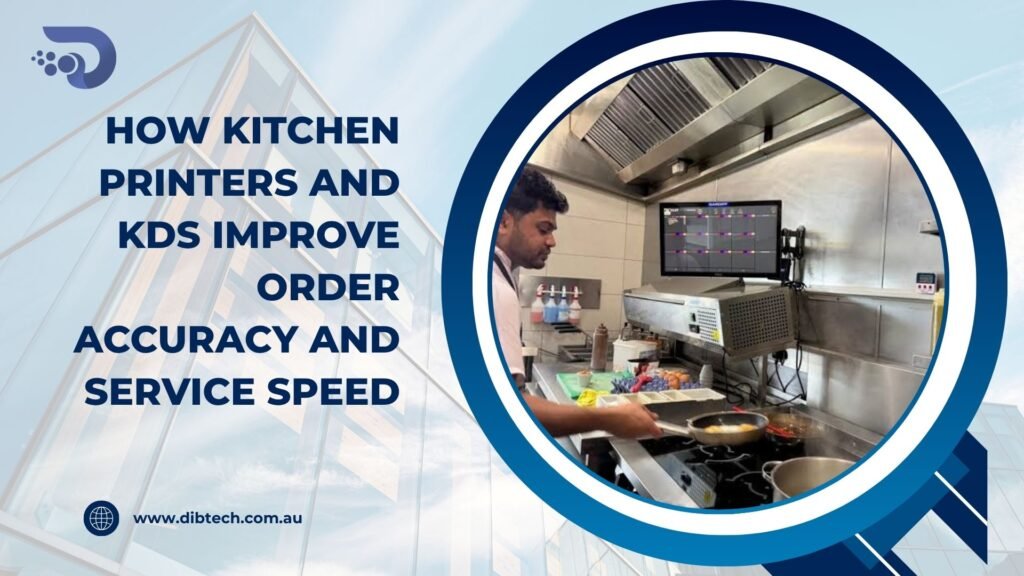
How Kitchen Printers and KDS Improve Order Accuracy and Service Speed
In a busy restaurant, every second matters. Customers expect their orders to be taken correctly, prepared quickly, and served without unnecessary delays. However, relying on handwritten tickets or verbal communication can make it difficult for kitchen and front-of-house teams to stay coordinated.
Kitchen printers and Kitchen Display Systems (KDS) provide a more organised way to move orders from the POS to the kitchen. By automatically communicating order information, these tools can help restaurants improve order accuracy, speed up preparation, and create a smoother workflow.
1. Faster Order Communication
One of the biggest benefits of integrating kitchen printers or KDS with a POS system is faster communication.
Once a staff member enters an order, it can be sent directly to the appropriate kitchen printer or display.
Instead of:
Take Order → Write Ticket → Walk to Kitchen → Explain Order
the process becomes:
Take Order → POS → Kitchen Printer/KDS → Kitchen Preparation
This reduces unnecessary movement and allows kitchen staff to start preparing orders sooner.
2. Improves Order Accuracy
Handwritten tickets can sometimes be difficult to read or may contain missing information.
POS-generated kitchen tickets and KDS screens clearly display information such as:
- Product name
- Quantity
- Modifiers
- Special instructions
- Table number
- Order number
- Order time
Providing clear information helps kitchen staff understand exactly what the customer ordered.
3. Reduces Manual Communication
Verbal communication can become challenging when a restaurant is busy.
Kitchen printers and KDS reduce the need for staff to verbally communicate every order. The order information is automatically transferred from the POS to the kitchen.
This can reduce misunderstandings and allow front-of-house employees to focus on serving customers while kitchen staff focus on food preparation.
4. Helps Manage Special Requests
Customers often request modifications to their meals.
For example:
- No onions
- Extra cheese
- Add sauce
- No salt
- Well done
- Extra spicy
When these modifications are entered into the POS, they can appear on the kitchen ticket or KDS.
This gives kitchen staff clear instructions and reduces the risk of missing important customer requests.
5. Faster Kitchen Preparation
When kitchen staff receive orders immediately, they can begin preparation sooner.
A KDS can display incoming orders in an organised queue, while kitchen printers provide physical tickets that can be placed at individual preparation stations.
This helps kitchen staff understand what needs to be prepared and when.
6. Supports Different Kitchen Stations
Restaurants often have multiple preparation areas, such as:
- Grill
- Pizza
- Fryer
- Salad
- Dessert
- Bar
POS integration can send specific products to the appropriate printer or KDS station.
For example:
Burger → Grill
Pizza → Pizza Station
Drinks → Bar
This prevents kitchen staff from having to sort through unrelated orders and helps each station focus on its responsibilities.
7. Helps Reduce Customer Waiting Times
Faster communication between the POS and kitchen can help reduce delays.
When an order reaches the kitchen immediately, preparation can begin sooner. Staff also spend less time walking between the dining area and kitchen.
A smoother workflow can help restaurants serve customers more efficiently, particularly during busy periods.
8. KDS Provides Real-Time Order Tracking
Unlike a traditional paper ticket, a Kitchen Display System can provide real-time visibility into order progress.
For example:
New → Preparing → Ready → Completed
Kitchen staff can update the status as they work, allowing front-of-house employees to see which orders are ready.
This can reduce the need for staff to repeatedly ask the kitchen about order progress.
9. Helps Prioritise Orders
During peak periods, the kitchen may receive many orders simultaneously.
A KDS can organise orders based on factors such as:
- Order time
- Order type
- Table number
- Preparation status
- Waiting time
This gives kitchen staff a clearer understanding of their workload and helps them manage orders more effectively.
10. Improves Staff Productivity
A well-organised kitchen workflow allows employees to spend less time dealing with paperwork and manual communication.
Instead, staff can focus on their main responsibilities.
Front of house: Take orders and serve customers.
Kitchen: Prepare and complete orders.
This division of responsibilities can improve productivity and reduce unnecessary interruptions.
11. Provides a Consistent Order Format
Every kitchen ticket or KDS order can follow the same structure.
This makes it easier for employees to understand orders, even when the restaurant is busy or new staff members join the team.
Consistent information can include:
- Order number
- Table number
- Products
- Quantity
- Modifiers
- Special instructions
- Order time
12. Helps Manage Peak Trading Periods
Lunch and dinner rushes can place significant pressure on restaurant staff.
Kitchen printers and KDS systems help create a structured order queue so employees can see what needs to be prepared.
This can make it easier to handle a high volume of orders without relying entirely on verbal communication.
13. Reduces Lost or Misplaced Orders
Paper tickets can occasionally be misplaced or overlooked.
A digital KDS keeps active orders visible on the screen until they are completed. This can make it easier for kitchen staff to identify outstanding orders.
Kitchen printers can also provide a physical reference for restaurants that prefer printed tickets.
14. Connects the POS and Kitchen
The real benefit comes from integrating the kitchen technology with the POS.
The POS becomes the central point for entering orders, while the printer or KDS delivers the information directly to the kitchen.
The workflow becomes:
Customer → POS → Kitchen Printer/KDS → Preparation → Ready → Customer
This creates a more connected restaurant operation.
Kitchen Printer vs KDS
Both solutions can improve restaurant order management, but they work differently.
| Feature | Kitchen Printer | KDS |
|---|---|---|
| Physical ticket | ✅ | ❌ |
| Digital order display | ❌ | ✅ |
| Real-time status tracking | Limited | ✅ |
| Order timers | Limited | ✅ |
| Paper required | Yes | No |
| Kitchen station support | ✅ | ✅ |
| POS integration | ✅ | ✅ |
| Order prioritisation | Manual | System-dependent |
| Completed order tracking | Limited | ✅ |
Some restaurants may benefit from using both. For example, a KDS can manage the main kitchen order queue while printers send individual items to specific preparation stations.
Best Practices for Kitchen Printers and KDS
To get the most from these systems:
- Configure products to the correct kitchen station.
- Ensure modifiers and special instructions appear correctly.
- Test all menu categories after setup.
- Train staff on the POS and KDS workflow.
- Check printer paper and connectivity regularly.
- Keep kitchen displays visible and easy to read.
- Review order routing when adding new menu items.
- Monitor peak periods to identify kitchen bottlenecks.
- Keep POS and KDS software properly maintained.
- Regularly review the restaurant’s workflow and make adjustments where needed.
Conclusion
Kitchen printers and KDS can help restaurants improve both order accuracy and service speed. Kitchen printers provide clear physical tickets, while Kitchen Display Systems offer real-time digital order management and status tracking.
When integrated with a POS system, they can reduce manual communication, improve kitchen organisation, support different preparation stations, and help staff manage busy periods more effectively.
For restaurants looking to create a faster and more organised operation, combining POS, kitchen printers, and KDS technology can provide a connected workflow from order taking to food preparation and service.