The Future of Self-Service POS Systems
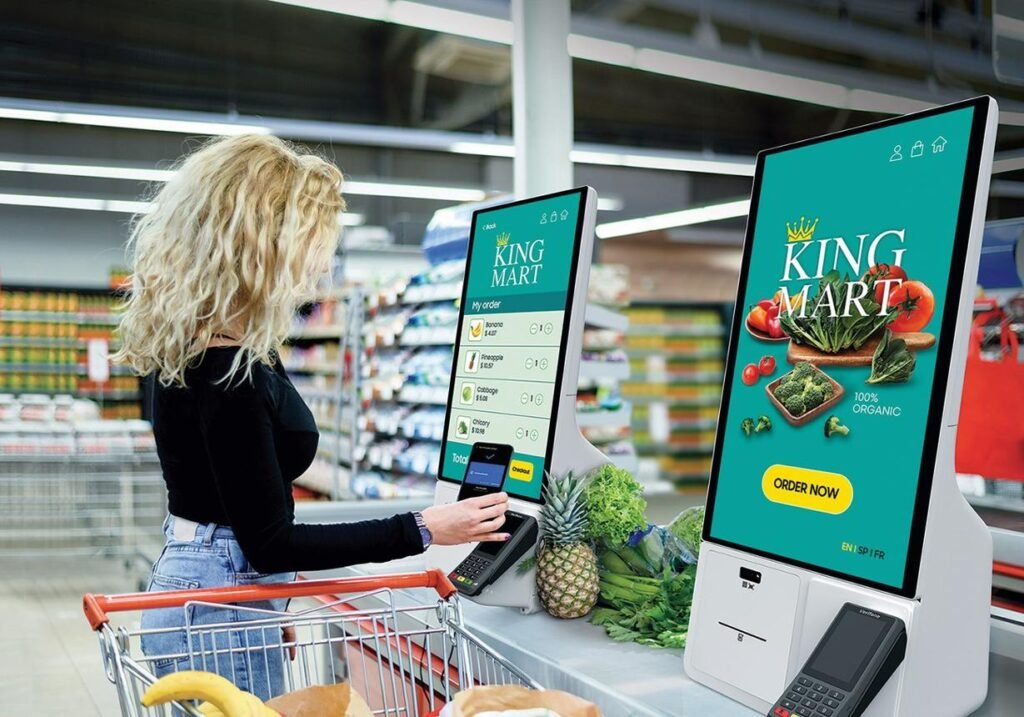
Self-service POS systems are changing the way customers interact with businesses. Instead of waiting for an employee to process every transaction, customers can browse products, place orders, make payments and complete purchases themselves.
What started primarily as self-checkout kiosks in supermarkets has expanded into restaurants, cafes, convenience stores, entertainment venues and other retail environments. In 2026, the technology is moving beyond simple self-checkout toward AI-powered, connected and more flexible POS experiences. The National Retail Federation identifies AI, connected systems and improved customer journeys as major retail technology priorities, while Gartner highlights AI-enabled smart checkout as an emerging area for reducing checkout friction, improving loss prevention and addressing labour pressures.
So, what will the next generation of self-service POS systems look like?
What Is a Self-Service POS System?
A self-service POS system allows customers to complete some or all of the purchasing process without direct assistance from a staff member.
Depending on the business, this might involve:
- Selecting products on a touchscreen
- Scanning products using a barcode scanner
- Customising food or drink orders
- Applying discounts or loyalty accounts
- Selecting a payment method
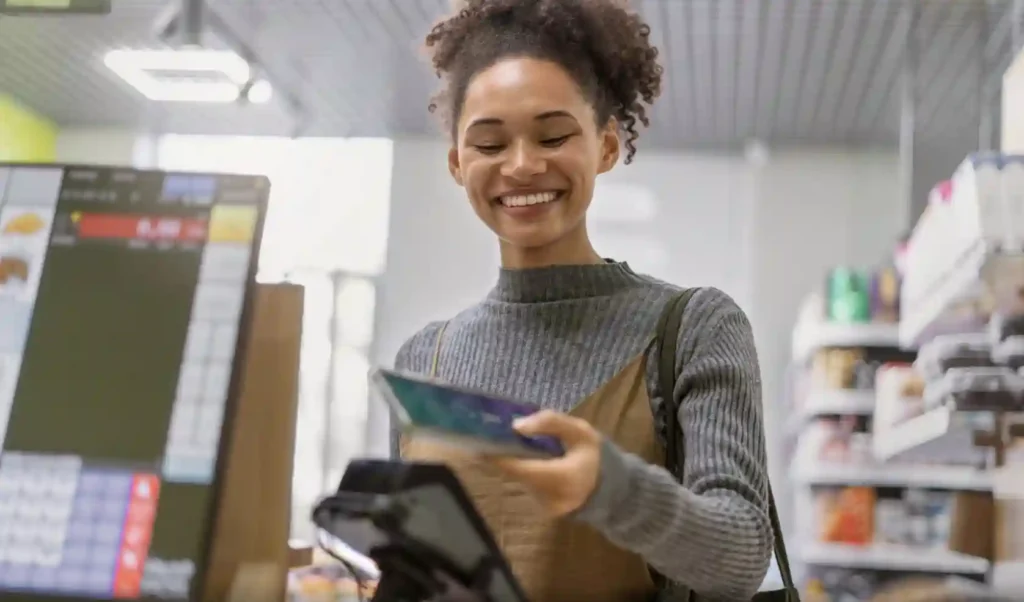
- Completing contactless or card payments
- Printing or receiving a digital receipt
Self-service does not necessarily mean that employees disappear from the checkout process. Instead, staff can move from performing every transaction to supervising the system and assisting customers when necessary.
This creates an important distinction: the future of self-service POS is likely to be about combining automation with human support rather than completely replacing employees.
Why Businesses Are Investing in Self-Service POS
Customer expectations have changed significantly. Shoppers increasingly expect convenient, quick and flexible ways to purchase products.
Research discussed by PwC found that 55% of surveyed consumers used self-checkout while holiday shopping, while 27% used in-store navigation kiosks to find products and check availability.
For businesses, self-service technology can provide several potential advantages.
Faster Checkout
Customers who have only a few products may prefer completing their purchase themselves rather than waiting in a traditional checkout queue.
During busy periods, multiple self-service stations can also provide additional checkout capacity.
Greater Customer Convenience
Self-service gives customers more control over their shopping experience. They can browse, select and pay at their own pace without needing assistance for every step.
Better Use of Staff
Employees can spend less time processing straightforward transactions and more time helping customers, restocking products, preparing orders or handling more complicated requests.
The latest retail technology developments increasingly focus on using automation to support employees rather than simply replacing them.
Flexible Store Operations
Self-service POS can be particularly useful for businesses that experience significant differences between quiet and peak periods.
A retailer may use traditional staffed checkout during busy periods while allowing customers to use self-service stations when appropriate.
How AI Could Change Self-Service POS
One of the biggest developments will be the integration of artificial intelligence.
Traditional self-service systems generally follow predefined instructions. Future systems could become much more capable of understanding customer behaviour and responding to unusual situations.
For example, AI could help identify:
- Products that have not been scanned correctly
- Unusual checkout behaviour
- Potential pricing errors
- Suspicious transactions
- Customers who require assistance
- Product recognition without traditional barcode scanning
AI is already becoming a major focus across retail technology. NRF’s 2026 retail outlook identifies AI as one of the key forces transforming retail operations and customer experiences.
Gartner similarly identifies AI-enabled smart checkout as an emerging technology area aimed at reducing friction, improving loss prevention and addressing labour pressures.
Computer Vision and Smarter Checkout
Another important development is computer vision.
Instead of relying entirely on customers scanning individual products, cameras and computer vision technology can potentially identify products and detect what is happening around the checkout area.
This could make the checkout process faster and reduce some of the problems associated with missed or incorrect scans.
However, businesses will need to balance convenience with privacy, security and accuracy. A technology that incorrectly identifies products or creates too many alerts could make the customer experience worse rather than better.
Mobile POS Will Become More Important
The future of self-service will not necessarily be limited to fixed kiosks.
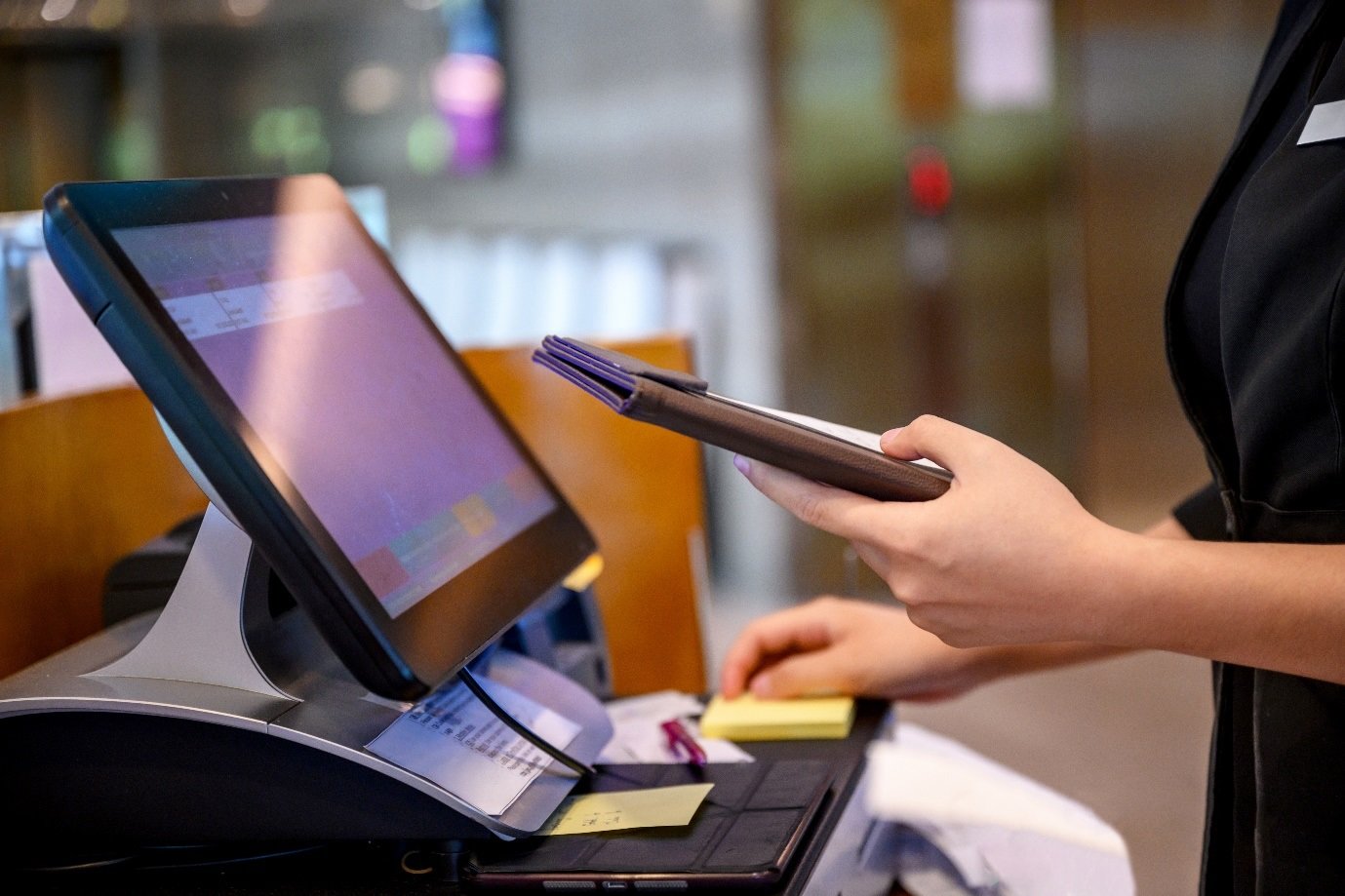
Mobile POS devices can allow customers and employees to complete transactions in different areas of a store.
For example, a retailer could allow customers to:
- Browse products.
- Scan items using a mobile device.
- Review their cart.
- Pay electronically.
- Receive a digital receipt.
Mobile POS can also give employees greater flexibility. Staff could assist customers away from a traditional checkout counter or process transactions during busy periods.
Industry research in 2026 is highlighting mobile devices with POS functionality alongside self-checkout and self-scanning as important areas of checkout development.
Self-Service POS Will Become More Connected
The future POS system will not operate as an isolated checkout machine.
Instead, self-service POS will increasingly connect with:
- Inventory systems
- Customer loyalty programs
- Online stores
- Payment platforms
- Digital receipts
- Kitchen systems
- Business reporting
- Customer accounts
This connectivity means a transaction completed through a self-service station could immediately update inventory, customer information and sales reporting.
The broader retail technology industry is moving toward connected systems that use shared data to improve decision-making and create consistent experiences across physical and digital channels.
Personalised Self-Service Experiences
Another potential development is personalisation.
A customer who identifies themselves through a loyalty account could receive relevant information during checkout, such as:
- Available loyalty rewards
- Personalised promotions
- Frequently purchased products
- Relevant discounts
- Digital receipts
The goal would be to make self-service feel less like using a machine and more like having a personalised shopping experience.
However, businesses will need to use customer data responsibly and provide appropriate privacy protections.
Self-Service POS in Restaurants
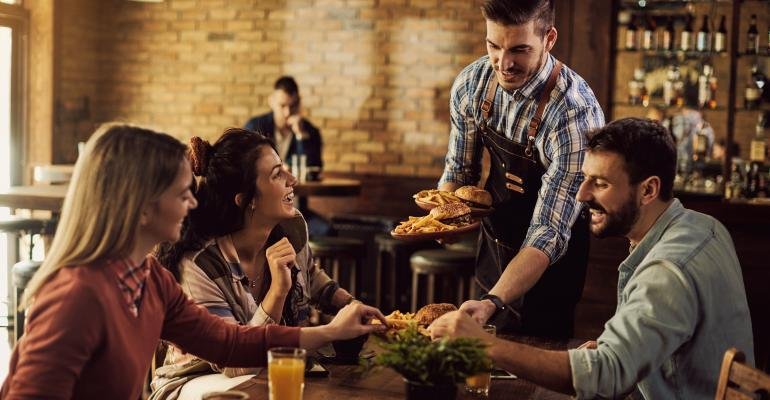
Self-service technology is also becoming increasingly relevant to restaurants and cafes.
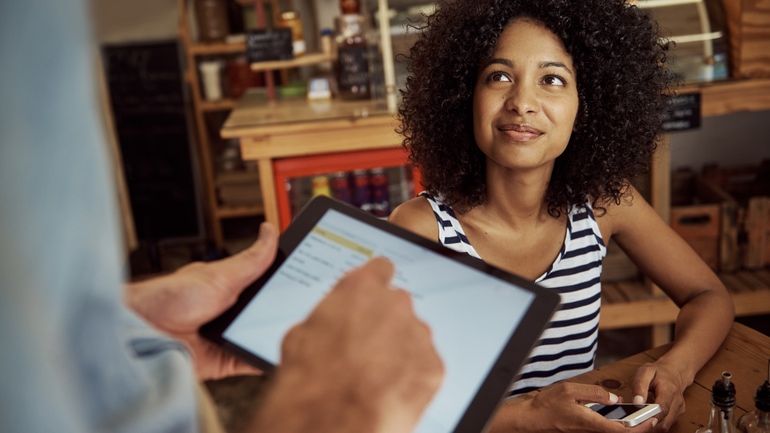
Instead of ordering entirely through a cashier, customers could use a kiosk or tablet to:
- Browse the menu
- Select meals
- Add modifiers
- Request special instructions
- Pay for the order
- Receive an order number
The order can then be sent directly to the kitchen or order management system.
This can reduce the amount of manual order entry required from staff and potentially reduce mistakes caused by incorrectly entering customer requests.
For busy restaurants, the combination of self-service ordering + integrated POS + kitchen management could become an important part of future operations.
The Challenge of Security and Loss Prevention
Self-service POS also creates challenges.
Businesses need to consider:
- Product theft
- Incorrect scanning
- Payment fraud
- Unauthorised discounts
- System misuse
- Customer privacy
- Technical failures
This is why future self-service systems are likely to combine automation with additional security technologies.
Industry developments showcased at NRF 2026 include AI-enabled self-checkout and computer-vision-based loss prevention designed to improve checkout efficiency while addressing shrink.
The objective isn’t simply to make checkout faster. It is to make automated checkout fast, accurate and secure.
Will Self-Service POS Replace Employees?
Probably not completely.
The more realistic future is a hybrid checkout environment.
Businesses may have:
- Traditional staffed POS terminals
- Self-service kiosks
- Mobile POS devices
- Online ordering
- Automated checkout technology
Employees can then focus on areas where human interaction provides more value.
For example, instead of an employee spending an entire shift processing basic transactions, they could assist customers with product questions, resolve unusual transactions and maintain the store.
This approach allows automation to handle repetitive tasks while people handle situations that require judgement or personal interaction.
What the Future Could Look Like
The next generation of self-service POS systems is likely to be more intelligent, connected and flexible than today’s systems.
A future customer might enter a store, use their phone or loyalty account to identify themselves, select products, receive personalised offers, complete an automated checkout and receive a digital receipt without ever standing in a traditional checkout queue.
Behind the scenes, the POS could simultaneously update inventory, record the transaction, analyse purchasing behaviour and provide real-time information to the business.
That vision is already reflected in the direction of current retail technology: AI, self-service, mobile POS, connected systems and real-time data are increasingly being brought together into a single checkout ecosystem.
Conclusion
Self-service POS systems are evolving from simple checkout kiosks into intelligent retail platforms.
The future will likely involve AI-powered checkout, computer vision, mobile POS, personalised experiences and deeper integration with business systems. Rather than completely removing employees from the checkout experience, these technologies can help businesses automate repetitive tasks while allowing staff to focus on customer service and more valuable activities.
For businesses considering a new POS system, the important question is no longer simply whether the system supports self-service. It is whether the POS can connect, adapt and scale as customer expectations and technology continue to change.
As self-service technology continues to develop, businesses that choose flexible and integrated POS solutions will be better positioned to adapt to the next generation of checkout experiences.