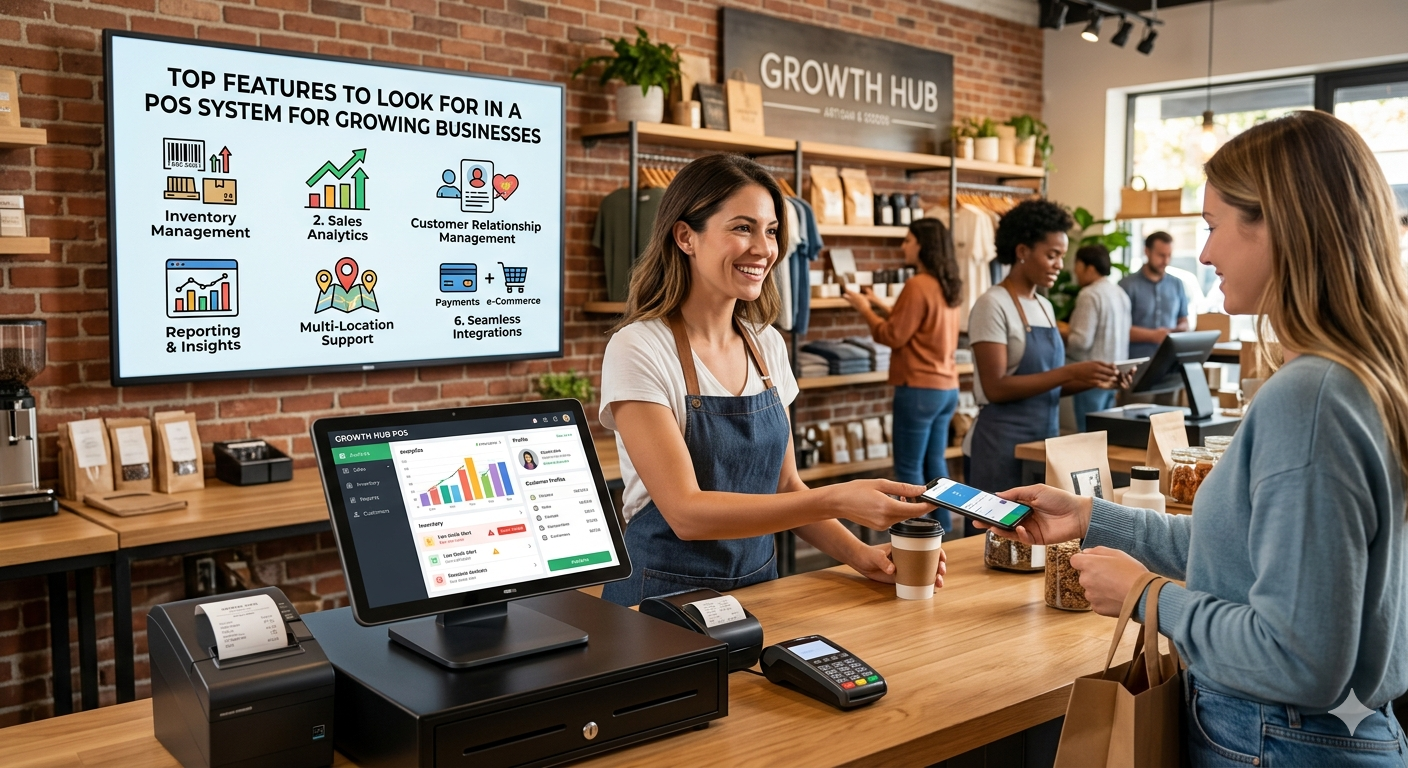
POS Order Management: Managing Online and Offline Orders
POS order management helps modern businesses handle both online and offline sales more efficiently. Today, restaurants, cafés, and retail stores receive orders from websites, delivery apps, and physical customers at the same time. Without a proper system, managing multiple sales channels can quickly become confusing.
This is where a modern POS system becomes essential.
A Point of Sale (POS) system does much more than process payments. In fact, it helps businesses centralize orders, sync inventory, reduce errors, and improve operational efficiency.
In this blog, we will explore how POS systems simplify order management and improve business efficiency.
What Are Online and Offline Orders?
Before understanding how a POS system works, it is important to know the difference between online and offline orders.
Offline Orders
Offline orders are placed directly at the business location. These may include:
- Walk-in customers
- Dine-in restaurant orders
- Counter payments
- Phone orders entered manually
Online Orders
Online orders are placed through digital platforms such as:
- Business websites
- Mobile apps
- Food delivery services
- E-commerce platforms
- QR ordering systems
Managing both order types separately often creates unnecessary confusion. Therefore, many businesses now use integrated POS systems to keep everything connected.
Why POS Order Management Is Important for Businesses?
Many businesses still manage online and offline orders separately. Unfortunately, this can create several operational problems.
1. Inventory Mismatch
When systems are not synced properly, inventory levels become inaccurate. As a result, businesses may accidentally sell products that are already out of stock.
This not only affects operations but also creates a poor customer experience.
2. Delayed Orders
Manual order entry takes extra time. During busy hours, staff may miss orders or enter incorrect items.
For restaurants, even small delays can affect customer satisfaction significantly.
3. Reporting Problems
Managing multiple sales channels separately makes reporting more complicated. In many cases, online and offline sales reports may not match correctly.
Because of this, business owners may struggle to track actual revenue and inventory performance.
4. Staff Confusion
Employees often find it difficult to manage orders coming from different platforms at the same time.
For example, one team may handle dine-in customers while another manages online delivery orders. Without a centralized system, communication problems can easily occur.
5. Poor Customer Experience
Customers expect fast and accurate service. However, disconnected systems often lead to:
- Wrong orders
- Delayed preparation
- Product availability issues
- Long waiting times
Over time, these problems can damage customer trust and reduce repeat business.
How POS Order Management Improves Business Operations
A modern POS system helps businesses manage everything from one place. Let’s look at the biggest advantages.
1. Centralized POS Order Management
One of the biggest benefits of a POS system is centralized order management.
Instead of handling orders separately, all online and offline orders appear in one dashboard. Whether an order comes from a delivery app, website, or physical store, staff can manage everything from a single screen.
As a result:
- Orders are processed faster
- Staff confusion is reduced
- Businesses improve overall efficiency
For restaurants, this also helps kitchen staff receive orders instantly without manual entry.
2. POS Order Management and Real-Time Inventory Sync
Real-time inventory tracking is another major advantage.
Whenever a product is sold online or offline, the inventory updates automatically across all sales channels. Therefore, businesses can avoid inventory mismatches and overselling problems.
This helps businesses:
- Prevent stock shortages
- Improve inventory accuracy
- Save time on manual updates
- Reduce operational mistakes
For supermarkets and restaurants with fast-moving inventory, this feature is especially important.
3. Faster Processing With POS Order Management
A POS system also speeds up the entire order process.
Instead of manually entering every order, businesses can automate several tasks. For example:
- Online orders can print automatically in the kitchen
- Payment information syncs instantly
- Orders appear directly on the POS screen
- Staff do not need to enter duplicate information
Because of this, businesses can serve customers faster and reduce human error during busy periods.
4. Better Reporting and Analytics
Tracking online and offline sales separately can become complicated. Fortunately, integrated POS systems combine all sales data into one reporting system.
Business owners can easily monitor:
- Total sales
- Best-selling products
- Online versus offline revenue
- Peak business hours
- Inventory performance
With accurate reports, businesses can make smarter decisions and improve profitability.
5. Improved Customer Experience
Customer experience plays a major role in business success.
Integrated POS systems help improve service by:
- Reducing waiting times
- Preventing order mistakes
- Supporting faster billing
- Improving order accuracy
- Offering multiple payment options
As a result, customers enjoy a smoother ordering experience and are more likely to return.
6. Multi-Store POS Order Management
Managing multiple branches can be challenging without the right tools.
Cloud-based POS systems allow business owners to monitor all locations from one platform. This makes operations more organized and easier to manage.
Business owners can:
- Track sales remotely
- Sync inventory between branches
- Manage online orders centrally
- Access reports from multiple stores
Therefore, multi-store businesses can maintain better consistency across all locations.
7. Support for Offline Mode
Internet issues can interrupt online operations. However, many modern POS systems include offline mode support.
Offline mode allows businesses to continue operating even during internet outages.
For example, businesses can:
- Continue billing customers
- Save transactions locally
- Sync data automatically once the connection returns
Because of this, businesses can avoid downtime and continue serving customers smoothly.
Key Benefits of POS Order Management
Here is a quick summary of the biggest advantages:
- Centralized order management
- Faster order processing
- Real-time inventory syncing
- Improved reporting accuracy
- Better customer experience
- Easier multi-store management
- Reduced operational errors
Businesses That Benefit From POS Order Management
Many industries benefit from integrated online and offline order management.
Restaurants and Cafés
- Food delivery integration
- Kitchen printer automation
- QR ordering support
Retail Stores
- E-commerce integration
- Real-time stock tracking
- Faster checkout process
Supermarkets
- Large inventory management
- Barcode scanning support
- Multi-location operations
Bakeries and Takeaway Shops
- Online preorder management
- Fast billing systems
- Delivery coordination
Final Thoughts
Managing online and offline orders separately can create unnecessary complexity for modern businesses. However, a reliable POS system simplifies operations by bringing everything together into one centralized platform.
From inventory syncing and faster billing to improved reporting and customer experience, integrated POS systems help businesses operate more efficiently every day.
As online ordering continues to grow, businesses that invest in a modern POS system will be better prepared to manage orders smoothly across all sales channels.