How Sales by User Features Helps Retail Businesses Track Staff Performance
Tracking employee performance is essential for retail businesses that want to improve productivity, increase sales, and provide better customer service. A Sales by User report in a modern POS system gives business owners and managers a clear view of how much each staff member sells during a specific period.
By connecting sales transactions to individual users, businesses can identify top performers, understand staff productivity, and make better workforce decisions.
What Is a Sales by User Report?
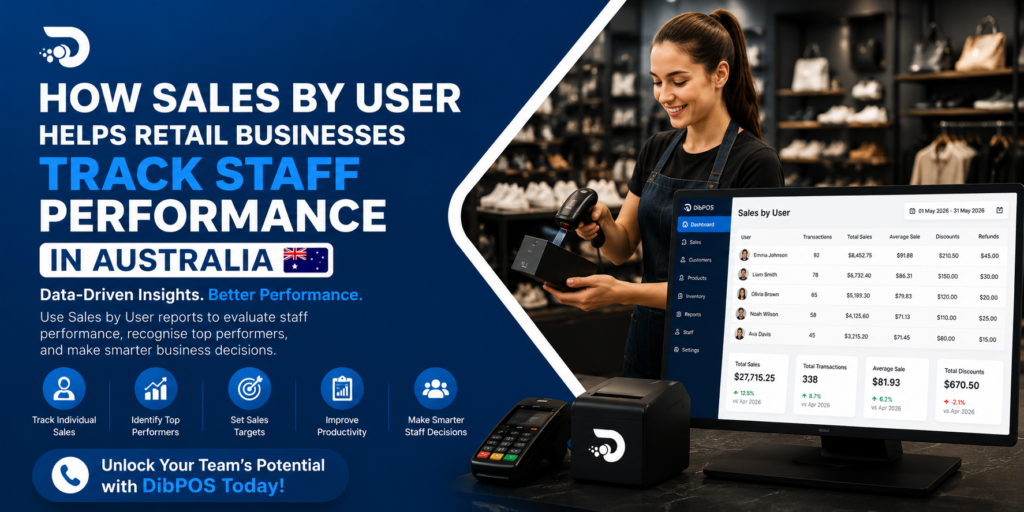
A Sales by User report shows sales transactions based on the employee or POS user who processed them.
Depending on the POS system, the report may provide information such as:
- Employee name
- Number of transactions
- Total sales
- Discounts applied
- Refunds
- Payment methods
- Average transaction value
- Sales performance over a selected period
This information gives managers a better understanding of individual staff performance.
1. Identify Top-Performing Employees
One of the main benefits of Sales by User reporting is the ability to identify employees who consistently generate strong sales.
Managers can compare individual sales results and recognise employees who:
- Generate higher sales
- Process more transactions
- Increase average transaction values
- Consistently perform well
Recognising high-performing employees can also improve motivation and encourage healthy competition.
2. Measure Individual Sales Performance
Instead of evaluating the entire store’s sales as one figure, managers can break sales down by employee.
For example:
| Employee | Transactions | Total Sales |
|---|---|---|
| Employee A | 85 | $4,250 |
| Employee B | 72 | $3,680 |
| Employee C | 61 | $2,950 |
This makes it easier to understand individual contribution to overall store performance.
3. Track Performance Over Time
Sales by User reports can be reviewed daily, weekly, monthly, or over a custom date range.
Managers can compare an employee’s performance over time to determine whether their sales are:
- Increasing
- Decreasing
- Consistent
This helps businesses identify performance trends rather than relying on a single day’s results.
4. Recognise Training Opportunities
Not every employee will have the same sales results. A consistently lower sales performance may indicate that an employee needs additional support or training.
Managers can provide training in areas such as:
- Product knowledge
- Customer service
- Upselling
- Cross-selling
- POS operation
- Promotional offers
This turns sales reporting into a useful employee development tool.
5. Improve Staff Accountability
When every transaction is linked to a POS user, employees have greater accountability for the sales they process.
Managers can review transactions and identify:
- Who processed the sale
- When the transaction occurred
- Discounts applied
- Refunds processed
- Total sales generated
This creates greater transparency within the business.
6. Monitor Discounts and Refunds
Sales by User reporting can help managers identify unusual patterns in discounts and refunds.
For example, if one employee consistently provides more discounts or processes significantly more refunds than others, management can review the transactions and determine whether additional training or investigation is required.
7. Set Realistic Sales Targets
Historical Sales by User data can help businesses establish realistic targets for individual employees.
Managers can use previous performance to create:
- Daily sales targets
- Weekly targets
- Monthly targets
- Team sales goals
Performance against these targets can then be monitored through POS reports.
8. Improve Customer Service
Sales performance isn’t only about revenue. When combined with transaction counts and customer data, sales reports can help managers understand how efficiently staff serve customers.
For example, managers can identify employees who handle a high number of transactions while maintaining strong sales performance.
This information can help businesses improve staffing and customer service strategies.
9. Make Better Staffing Decisions
Sales by User data can help managers understand which employees perform best during busy periods.
Combined with sales-by-hour reports, managers can determine when additional staff may be required and allocate employees more effectively.
This can help reduce:
- Long customer wait times
- Understaffing
- Overstaffing
- Unnecessary labour costs
10. Reward and Motivate Employees
Businesses can use Sales by User reports to create performance-based recognition programs.
For example, managers can recognise:
- Highest sales performer
- Most transactions processed
- Highest average transaction value
- Most improved employee
Rewarding employees based on measurable performance can encourage greater engagement and productivity.
Best Practices for Using Sales by User Reports
To get the most value from Sales by User reporting:
Review Reports Regularly
Check staff performance weekly or monthly rather than only when a problem occurs.
Compare Similar Periods
Compare employees across similar shifts, days, or trading periods for a fairer assessment.
Consider More Than Sales
Sales figures should be considered alongside customer service, attendance, transaction accuracy, and other relevant performance measures.
Use Data for Coaching
Use the report to identify training opportunities rather than simply focusing on low-performing employees.
Protect Employee Privacy
Limit access to staff performance information to authorised managers and administrators.
Conclusion
A Sales by User report gives retail businesses valuable insight into individual employee performance. By tracking sales, transactions, discounts, refunds, and other activities by POS user, managers can identify top performers, provide targeted training, improve accountability, and make smarter staffing decisions.
When combined with other POS reports such as Hourly Sales, Most Selling Products, and Staff Attendance, Sales by User reporting can provide a comprehensive picture of business and employee performance.
For modern retail businesses, turning POS data into actionable insights can be an important step toward improving productivity, customer service, and overall profitability.